







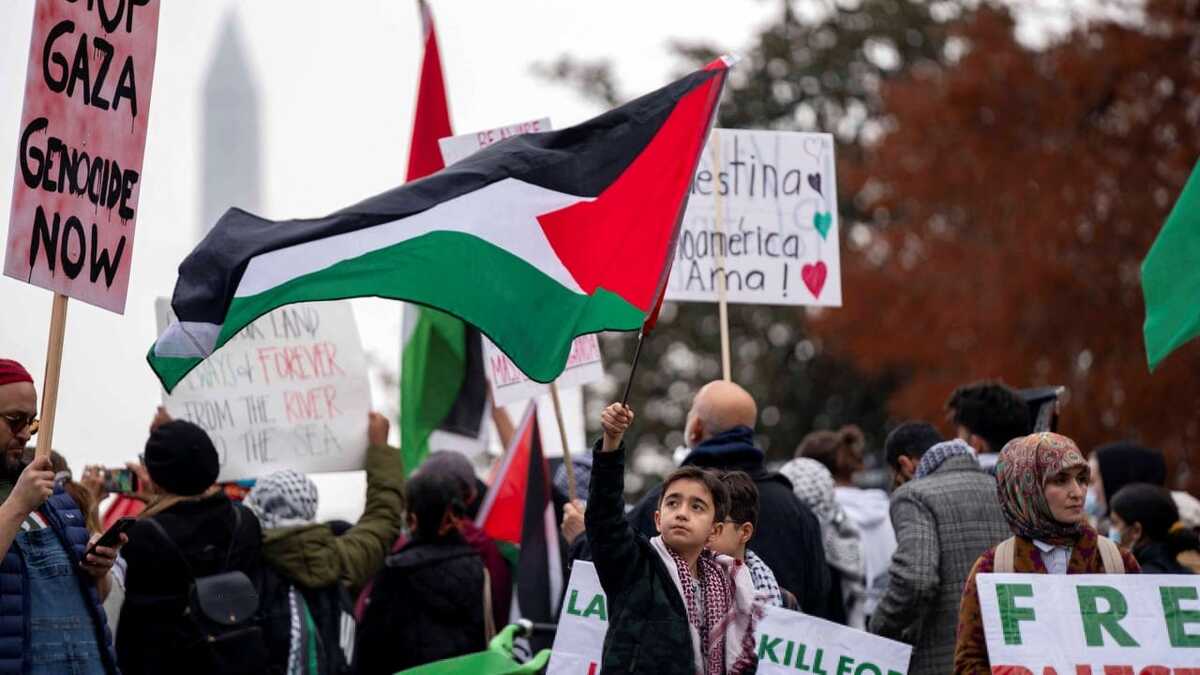
Britain, Australia, Canada and Portugal recognize Palestine; France, Belgium and other nations set to follow

Britain, Australia, Canada and Portugal recognized a Palestinian state on Sunday following almost two years of conflict in Gaza, with France, Belgium and other nations ready to follow at the UN General Assembly.
Below is a summary of diplomatic state recognition, which was unilaterally declared by the Palestinian leadership abroad in 1988.
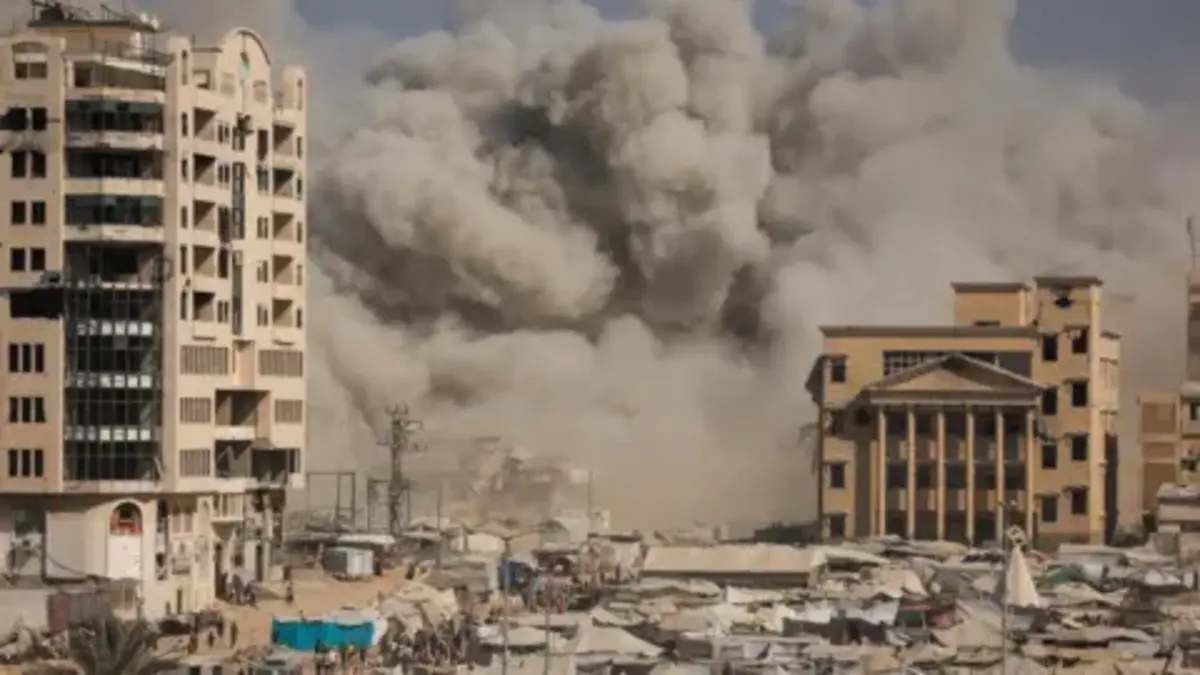
Of land that the state claims, Israel now occupies the West Bank and the Gaza Strip lies in ruins.
Which nations recognize or will recognize State of Palestine?
Answer: three-quarters of UN members.
At least 145 of the 193 members of the United Nations now recognize State of Palestine, an AFP tally shows.
AFP has not yet received recent confirmation from three African nations.
The total so far comprises Britain and Canada – the first two G7 nations to do so -, Australia and Portugal.
A number of other nations, such as France, Belgium, Luxembourg and Malta, are due to join at a summit on the future of the two-state solution to be hosted by France and Saudi Arabia on Monday at United Nations headquarters in New York.
Russia, along with every Arab nation, nearly every African and Latin nation, and nearly all Asian nations, including India and China, are already included.
Algeria was the first nation to formally recognize a Palestinian state on November 15, 1988, moments after the late Palestine Liberation Organisation (PLO) leader Yasser Arafat unilaterally declared an independent Palestinian state.
Dozens of other nations were to follow suit in subsequent weeks and months, and further waves of recognitions were received in late 2010 and early 2011.
The Israeli attack on Gaza has now prompted another 13 nations to recognize the state.
Who does not?
Answer: at least 45 nations, including Israel, the United States and their allies.
Israeli Prime Minister Benjamin Netanyahu’s government totally dismisses the concept of a Palestinian state.
In Asia, Japan, South Korea and Singapore are three of the nations that do not accept Palestine.
Neither does Cameroon in Africa, nor Panama in Latin America and the majority of nations in Oceania.
Europe is the most split continent on this issue, and is divided nearly 50-50 on Palestinian statehood.
Until the mid-2010s, the only states acknowledging the State of Palestine outside Turkey were members of the former Soviet bloc.
However, some of the ex-Eastern Bloc nations like Hungary and the Czech Republic are not recognising a Palestinian state at a bilateral level.
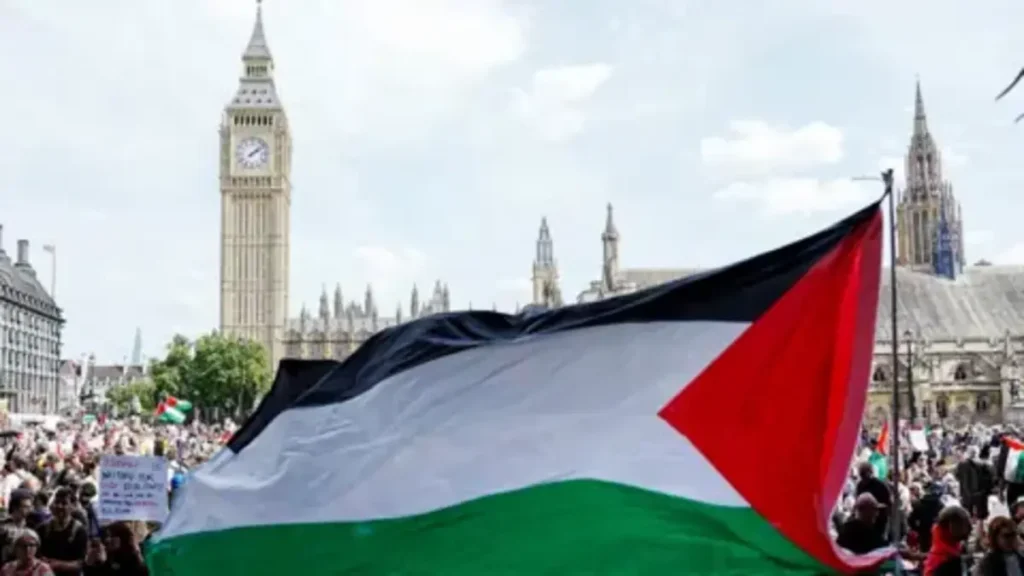
Western and northern Europe were hitherto united in non-recognition, except for Sweden, which made the recognition in 2014.
But the Gaza war has turned things around, with Norway, Spain, Ireland and Slovenia following Sweden’s lead to declare recognition of the state in 2024, prior to the United Kingdom and Portugal on Sunday.
Italy and Germany will not be recognising a Palestinian state.
What is recognition?
Romain Le Boeuf, a professor of international law at the University of Aix-Marseille in the south of France, likened recognition of Palestinian statehood as “one of the most complicated questions” in international law, “a little like halfway between the political and juridical”.
He said to AFP that states have the liberty to decide the timing and mode of recognition, with variations that are either explicit or implicit.
There is no office to register recognitions, Le Boeuf says.
“The Palestinian Authority in the West Bank places all they deem to be acts of recognition on their own list, but purely from a subjective perspective. Similarly, other states will declare they have or they have not recognised, but without actually having to justify themselves,” he told AFP.
Yet there is one area where international law is very specific: “Recognition does not mean that a state has been created, no more than the lack of recognition prevents the state from existing.”
Though recognition has mainly symbolic and political significance, three-quarters of nations state “that Palestine meets all the necessary conditions to be a state”, he said.
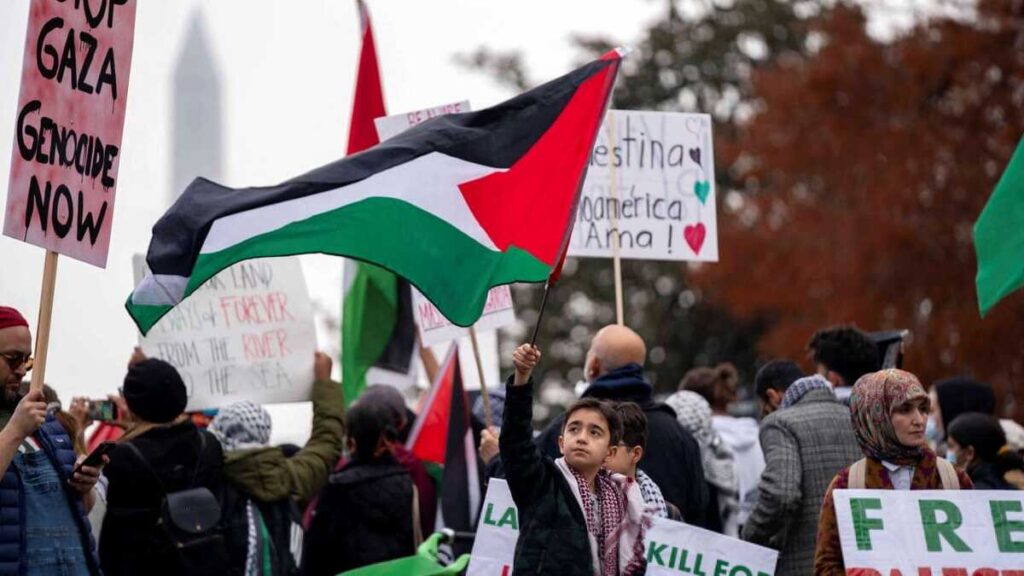
“I recognize that for many, this will appear just symbolic, but in fact symbolically it’s a game changer,” lawyer and Franco-British law professor Philippe Sands wrote in the New York Times during mid-August 2025.
“Because once you acknowledge Palestinian statehood. you effectively place Palestine and Israel on equal footing when it comes to their treatment under international law.”