









Nasser Faratawi holds up a burned garland of silicone flowers and a charred Ramadan lantern as he sorts through the ash remains of what was his well-liked party shop in Tulkarm in the north of the occupied West Bank.
Above, on the three floors of what were his family’s luxury apartments, graffiti covers the walls – including cartoons of penises in a living room and his daughter’s bedroom.
Expensive pieces of furniture have been smashed or hurled out of the window, elaborate decorations torn out, every page of a Quran ripped, and it smells of rotten takeaway food.
“They came and destroyed me,” Nasser says to me. “It’s all thought to be breakable because I live in this city – because I am Palestinian.”
On 3 March, the Israeli army came to the Faratawi property and warned the family to vacate within an hour and a half. The Israel Defense Forces (IDF) occupied the building as they conducted an enormous operation in the vicinity, in Tulkarm refugee camp.
“They used it as a military base and they occupied it for three-and-a-half months, treating it like a hotel, and then they burned it,” Nasser says, still stunned at what occurred.
The Israeli army took over my home used it like a hotel
Observing from afar, he says he noticed on 11 June that a fire had been lit in his warehouse and shop – where locals would take their cars to be ornamented for weddings.
“It was extremely difficult for me to witness my business on fire. All my efforts, for more than 30 years,” Nasser says. His area continued to be a closed military area, and he was only permitted to go back at the beginning of this month.
Questioned on the condition of the property, the Israeli military replied to the BBC that it was “not aware of any arson carried out by its soldiers at the location”, and that a complaint regarding the incident “has been lodged and is being considered”.
The IDF release went on to say: “The IDF opposes the damaging of civilian property by soldiers. As a general rule, deviations from IDF instructions and values that lead to incidents will be reviewed, investigated, and addressed by commanders.” It did not address the obscene graffiti.
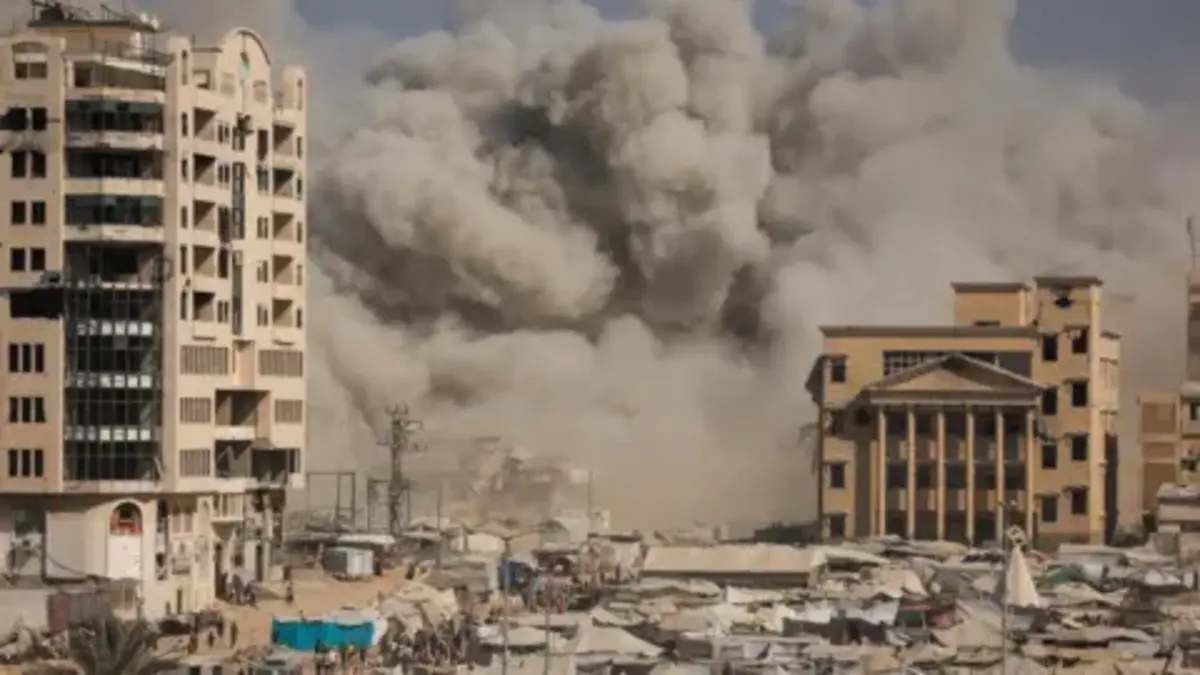
While since the lethal Hamas-led assault on Israel on 7 October 2023 the world focus has actually been on the Gaza Strip, where the horrific war was unleashed, tensions have also surged in the West Bank, with more Israeli settler raids and military operations which are allegedly against Palestinian militants by Israel.
The UN estimates over 900 Palestinians have been killed by IDF action and settlers in the West Bank since the beginning of the year. Meanwhile, over 60 Israelis have been killed in alleged Palestinian attacks or armed encounters in the West Bank and Israel.
Palestinian houses are often used as a matter of routine as temporary military outposts and interrogation facilities during large-scale Israeli operations, with the IDF invoking security need.

“To be able to find and destroy terror infrastructure at its source, sometimes the IDF must work from within houses within the region for lengths of time determined by operational requirements and battlefield conditions,” the Israeli military stated.
It insists it acts in accordance with international humanitarian law and takes “steps to reduce the impact on civilians to the greatest extent possible.”
In the final two weeks of June, while Israel was fighting Iran, the UN’s Humanitarian Office (Ocha) recorded Israeli troops occupying some 267 Palestinian houses for between several hours and several days. A preliminary estimate had put the number of people affected at over 1,300, who Ocha reports “in most cases returned home to find their property vandalised”.
- Israeli troops arrest Senator Mushtaq following Gaza flotilla attack
- Gold prices reach new high in Pakistan – October 1, 2025
- Gold hits record high 2025
- Qatar announces Gaza plan meeting to be held with Hamas, Turkey
- Pakistan initiates first sovereign platform to mobilize green and social funding
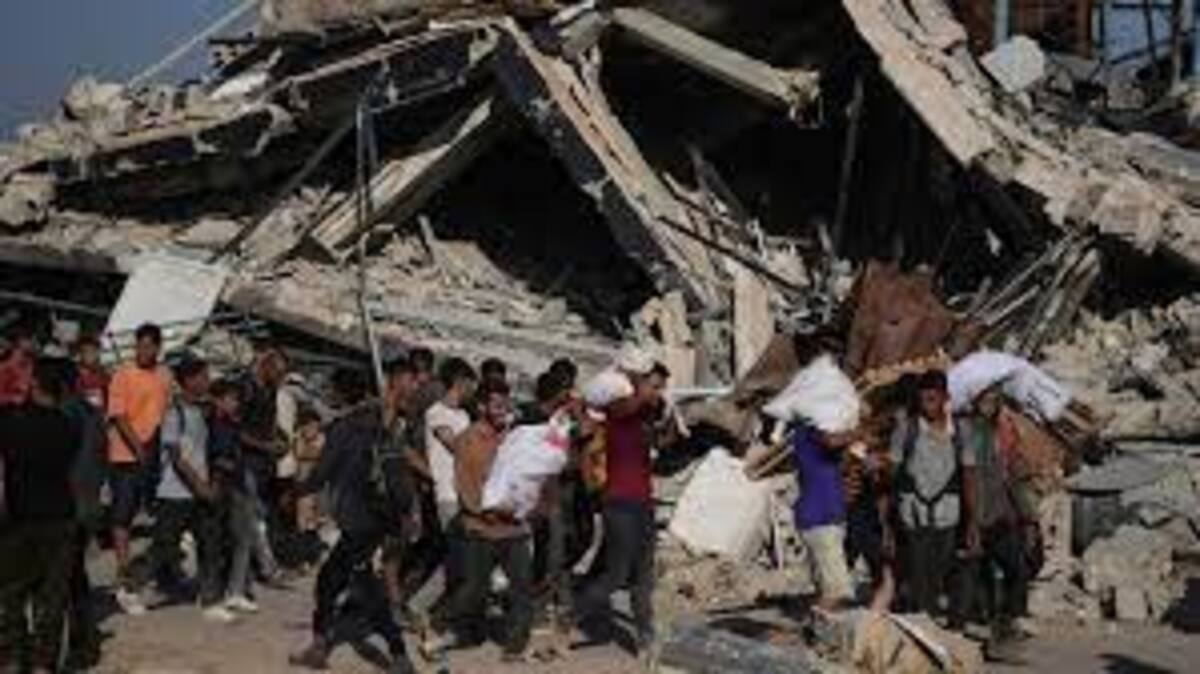
Properties were also seized at the beginning of the year in three developed, urban refugee camps – Jenin, Nur Shams and Tulkarm – when the Israeli military took over, referring to them as “terror strongholds”. In total, around 40,000 residents were compelled to evacuate the camps, approximately 30,000 of which have been unable to re-establish themselves.
Standing on a balcony on the second floor, you can easily gaze across from Nasser’s home to Tulkarm refugee camp. It is a ghost town with some 10,600 residents who resided there still without a home. Israeli bulldozers have made new roads through the camp – dividing it into discrete chunks.
The UN Palestinian refugee agency, Unrwa, puts the number of homes destroyed in Tulkarm above 150. Throughout the West Bank, Ocha reports that between the beginning of Israel’s Operation Iron Wall in January and the end of July there were over 1,400 demolition orders.

The Israeli army took over my home used it like a hotel
Unrwa also assists refugees residing in private accommodation in and around Tulkarm. It has established a temporary health clinic and schools, and online learning for students.
The defence minister of Israel has said that the army will remain in the three refugee camps until at least the end of the year.
Though Nasser Faratawi has returned to his house, he is thinking how on earth he can renovate it. He puts his total losses at as much as $700,000 (£520,000; €600,000). He can protest to Israeli authorities, but historic precedent does not suggest that he will be receiving any compensation.
The Palestinian Authority, which has jurisdiction over areas of the West Bank and depends on foreign contributions, once subsidised repairs resulting from Israeli military raids. It is now so short of cash that it is unable to provide full pay for government employees.
With his shop gone and his stock destroyed, Nasser has no source of income and fears that he will no longer be able to support his son and daughter, who have been pursuing studies in medicine in Egypt. He is calling for assistance from international agencies.

“I’m a normal person, a businessman,” he says. “I adore peace. I never previously had a weapon in my home. I had no quarrel with the Israeli army. I desire peace and to live peacefully, but they don’t desire peace.”