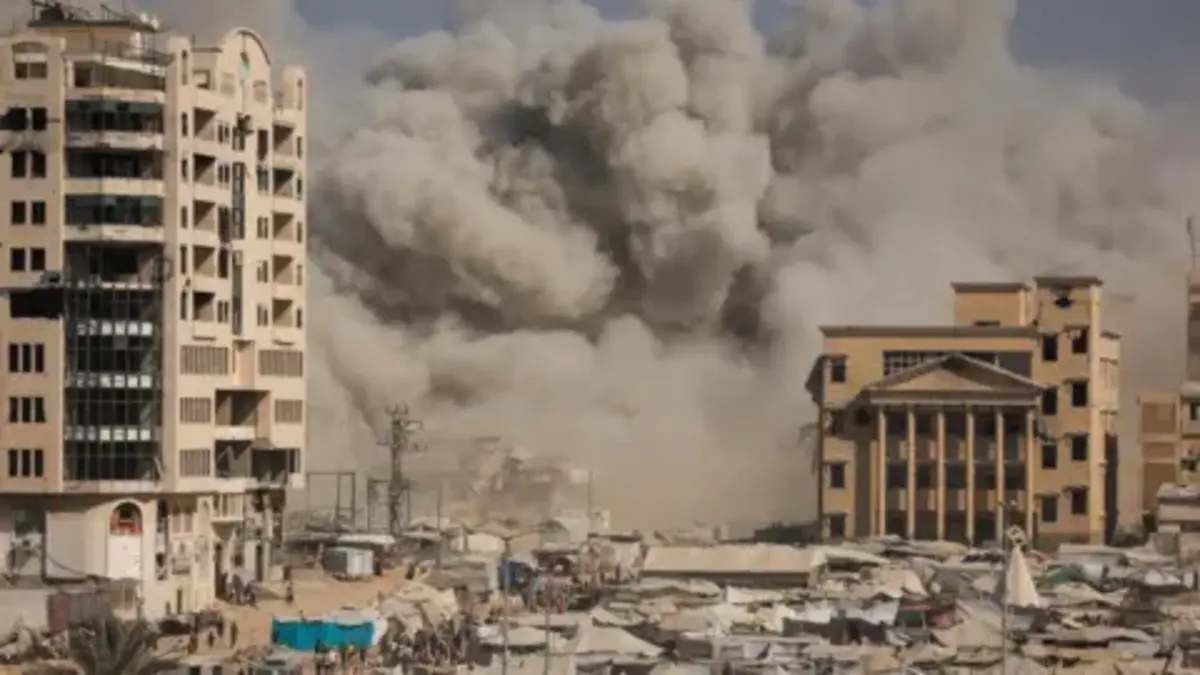










THE HAGUE: A United Nations Commission of Inquiry this week concluded that Israel has perpetrated genocide in Gaza. Israel rejected the findings as biased and based on hearsay evidence.
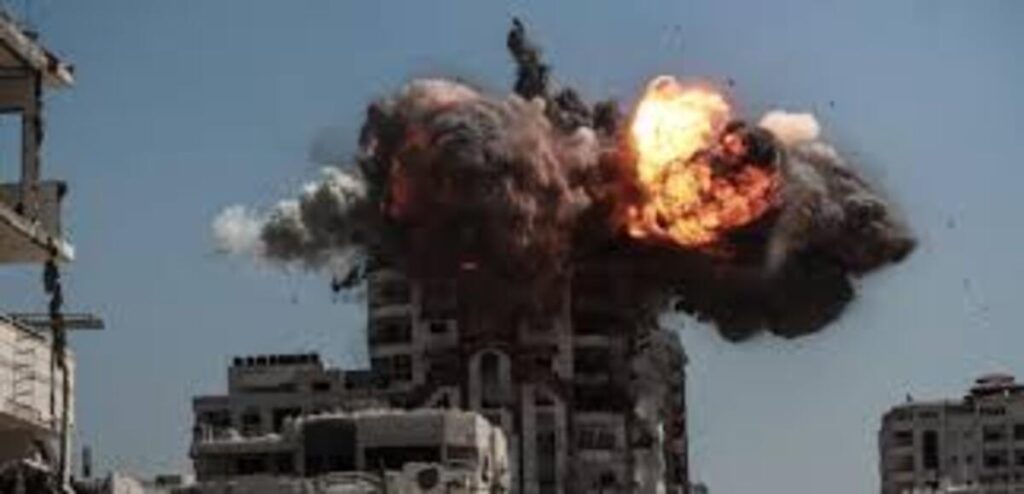
Below is a description of how genocide is legally defined, tried by courts, and how the U.N. inquiry came to its conclusions.
WHAT IS GENOCIDE?
Genocide is a rigorous legal definition and has only sporadically been established in court since it was codified in humanitarian law after the Holocaust.
The 1948 Genocide Convention characterizes genocide as crimes perpetrated “with intent to destroy, in whole or in part, a national, ethnical, racial or religious group, as such”.
Five criminal acts are considered genocide: killing members of the group, inflicting serious bodily or mental harm on them, creating conditions intended to destroy them, preventing births, or forcibly transferring children to other groups.
Only three cases at international tribunals have been ruled genocide: the 1970s Cambodian Khmer Rouge killings of minority Cham and Vietnamese that killed 1.7 million; Rwanda’s 1994 mass murder of Tutsis with 800,000 killed; and the 1995 Srebrenica massacre of approximately 8,000 Muslim men and boys in Bosnia.
WHAT DID THE U.N. INQUIRY IN GAZA FIND?
After interviewing 23 months of victims, witnesses, and doctors and examining open source papers and satellite images, the panel concluded “the Israeli authorities and Israeli security forces have had and continue to have the genocidal intent to destroy, in whole or in part, the Palestinians in the Gaza Strip”.
The Israeli state is liable for “the failure to prevent genocide, the commission of genocide and the failure to punish genocide against the Palestinians in the Gaza Strip,” it concluded.
How did a UN investigation conclude that genocide has been perpetrated in Gaza?
in whole or in part, the Palestinians in the Gaza Strip”. The Israeli state is liable for “the failure to prevent genocide, the commission of genocide and the failure to punish genocide against the Palestinians in the Gaza Strip,” it concluded.
The commission reports that Israeli officials and Israeli security forces are responsible for four of the five genocidal acts: “that is killing, causing serious bodily or mental harm, deliberately inflicting conditions of life calculated to bring about the destruction of the Palestinians in whole or in part, and imposing measures intended to prevent births.”
The U.N. report follows the same conclusion reached by the major genocide scholars’ association and human rights organizations.
WHAT EVIDENCE DOES THE INQUIRY QUOTE?
It quotes mass killings, obstruction of aid, displacement and destruction of health facilities including a fertility clinic as evidence.
The commission also quoted Israeli Prime Minister Benjamin Netanyahu and other officials as “direct evidence of genocidal intent.”
Among them was the November 2023 letter from the leader to Israeli troops equating the Gaza campaign to what the commission calls a “holy war of total annihilation” in the Hebrew Bible.
It also quoted statements of the previous defence minister, Yoav Gallant, in October 2023 in declaring a full blockade of Gaza and that Israel was at war “human animals” along with President Isaac Herzog who declared on October 14, 2023 that “an entire nation” is at fault.
Herzog decried the report’s conclusions stating his words had been taken out of context. Netanyahu and Gallant were not available for comment.
HOW TO PROVE GENOCIDE?
To convict a state and actors of genocide, a court would need to establish that at least one of five underlying crimes occurred and that the victims constituted a particular national, ethnic, racial or religious group.
Genocide is more difficult to establish than other breaches of international humanitarian law, including war crimes and crimes against humanity, since it must be proven that there was specific intent.
In order to prove intent the U.N. panel reported it reviewed the words used by Israeli officials and the course of action of Israeli leaders and Israeli security forces in Gaza “and concluded that genocidal intent was the only reasonable inference that could be drawn from the character of their actions”.
How did a UN investigation conclude that genocide has been perpetrated in Gaza?
It filed a case in 2023 before the International Court of Justice, the world’s top court in charge of state-to-state disputes, charging Israel with the crime of genocide.
It will take years before the case could be decided, but meanwhile it has instructed Israel to adopt measures against the commission of acts of genocide while fighting Hamas fighters in the Gaza Strip.
Read More: Doctors Without Borders expresses outrage at death of nurse from Israeli airstrike

The ICJ has jurisdiction over the Genocide Convention, the first human rights treaty passed by the U.N. General Assembly in 1948, proclaiming the international community’s determination that such crimes against humanity not occur again.
The International Criminal Court that can indict on charges of genocide is also considering alleged crimes in the Israeli-occupied Palestinian territories and has issued arrest warrants last November against Netanyahu and Gallant over alleged war crimes and crimes against humanity in the Gaza conflict, but prosecutors did not pursue a warrant at the time on charges of genocide.