







SMDA highlights Saudi Arabia’s increasing concern with the reliability of US security guarantees
On May 7, between 1:30am and 1:38am IST (Indian Standard Time), an Indian Air Force (IAF) 4.5-generation multirole Rafale EH was neutralized by Pakistani fire.

Within the same eight-minute period, three other Rafales were shot down, adding to a staggering cost of at least seven IAF assets lost — four Rafales, one MiG-29, one Mirage 2000 and one Su-30MKI.
On May 7, at 1:30am to 1:38am IST (Indian Standard Time), an Indian Air Force (IAF) 4.5-generation multirole Rafale EH was destroyed by Pakistani fire.
In the same eight-minute time span, three other Rafales were destroyed, adding up to an appalling figure of at least seven IAF assets lost — four Rafales, one MiG-29, one Mirage 2000 and one Su-30MKI.
In the history of air warfare, this frantic eight-minute whirlwind is an era-defining inferno. The historic battle has achieved two things: first, redefined the battlespace; and second, demonstrated Pakistan’s impressive capabilities in electronic countermeasures (ECM) and integrated air defence systems (IADS).
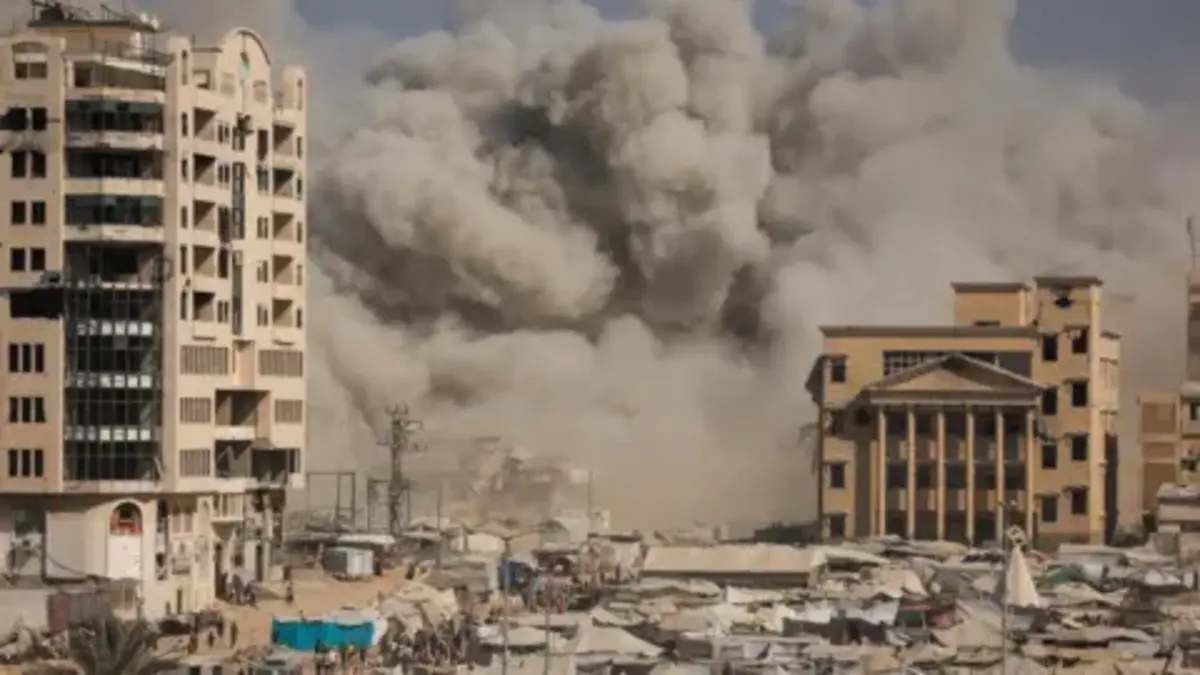
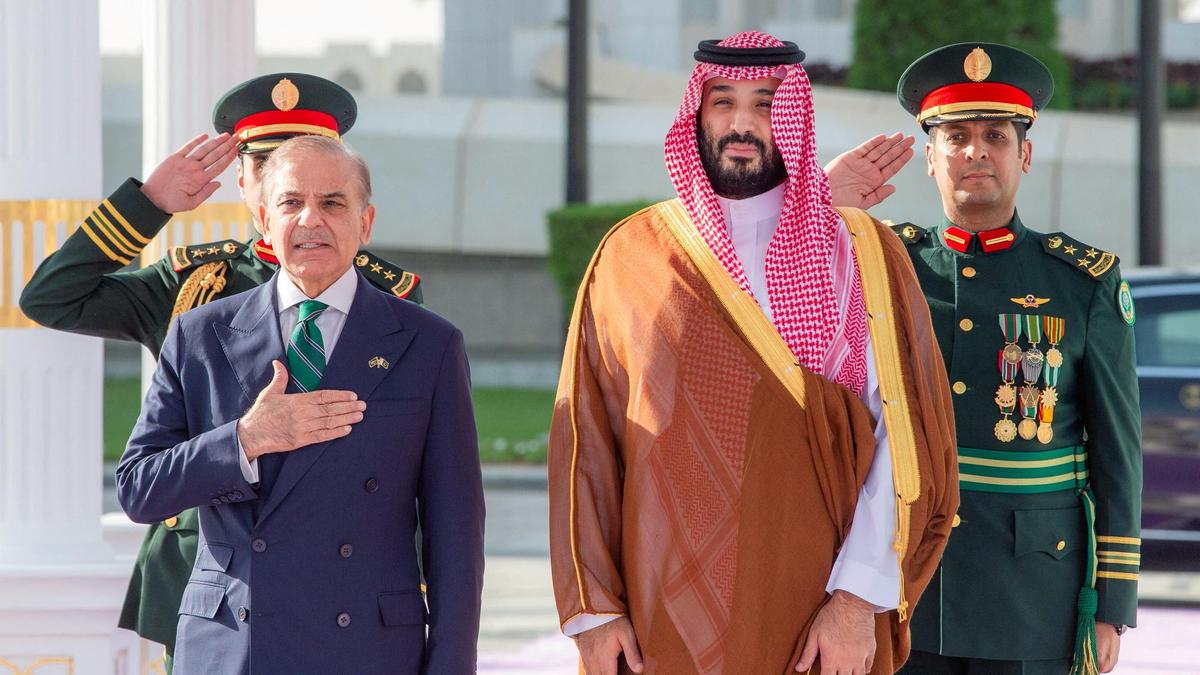
To be sure, the Strategic Mutual Defence Agreement (SMDA) is a turning point in the bilateral relationship. The SMDA highlights two key geopolitical facts: firstly, increasing Saudi concern over the credibility of US security guarantees; and secondly, Pakistan’s substantial bolstering of its regional deterrence position.
Defence pact pakistan saudi arabia
In 2019–2020, Saudi Arabia contributed $500 million per year for US troops’ expenses in the country to cover approximately 3,000 troops. Maintenance contracts for a year on Saudi Arabia’s F-15 fleet amount to $2 billion/year. Patriot missile maintenance $230 million/year.
Training $300 million annually. Logistics support $300 million annually. Joint exercises $100 million annually. Intelligence sharing $200 million annually. Between 2020 and 2025, Saudi Arabia contributed $70 million annually towards US advisory assistance. Arms sales within 10 years stood at $350 billion or an average of $35 billion annually.

For the Pakistan Army command, the SMDA presents two key opportunities: one, to enhance Pakistan’s strategic capacities; and two, to ensure economic stability. The following are seven detailed strategic suggestions to maximize gains while overcoming possible challenges.
One, the Pakistan Army needs to operationalize the collective defence clause of the SMDA forthwith by laying down a framework for interoperability with the Saudi forces with emphasis on multi-domain operations — air, land, cyber and electronic warfare. The army needs to initiate bilateral joint exercises, including war-gaming defence of Saudi holy places against air incursions within the next three months.
Two, the army has to induct training programs for 10,000-15,000 Saudi troops every year at Pakistani institutions such as the National Defence University, with focus on Pakistan’s combat-hardened doctrines in beyond-visual-range (BVR) engagements and electronic warfare (EW).
Three, the Pakistan Army has to formulate standard operating procedures for intelligence sharing through a joint operations center in Riyadh or Tabuk, merging Pakistan’s satellite reconnaissance with Saudi ground sensors to establish a 360-degree air defense network.
Four, SMDA provisions for mutual support may engage Pakistan in Saudi-oriented conflicts (such as Houthi aggression), which might put further pressure on Pakistan’s economy amidst current fiscal pressures.
To counter this, Pakistan would need to seek a committed SMDA annexe for energy security, negotiated guaranteed Saudi oil deliveries at preferential terms to enhance economic resilience.
Five, Pakistan can also ask for a special SMDA annexe to make a $10 billion to $15 billion Saudi investment fund exclusively for Pakistan’s defence industry.
This fund would be used for joint ventures like co-production of cutting-edge weapons. Six, Pakistan needs to make joint ventures for co-development of systems like integrated air defence networks, integrating Pakistan’s Erieye AEW&C with Saudi radar assets, targeting sales to OIC members for generating revenues.
Seven, Pakistan needs to acquire Saudi investment in hypersonic missile and drone R&D, using the PL-15 success to learn and calibrate for Saudi requirements, while bringing in Saudi/UAE know-how in cyber defense to enhance Pakistan’s capabilities.

The SMDA promises a new strategic synergy era, enabling Pakistan to augment its defence capabilities and economic resilience as well as consolidate its central position in regional security dynamics.