








Microsoft claims its new £30bn ($22bn) investment in the UK’s AI industry – its biggest outside America – will greatly strengthen the British economy within the next few years.
The package is part of a £31bn deal struck between the UK government and other US tech firms, such as Nvidia and Google, to invest in British-based infrastructure to underpin AI technology, predominantly in the form of data centres.
Microsoft is also now part of making a new powerful supercomputer in Loughton, Essex.
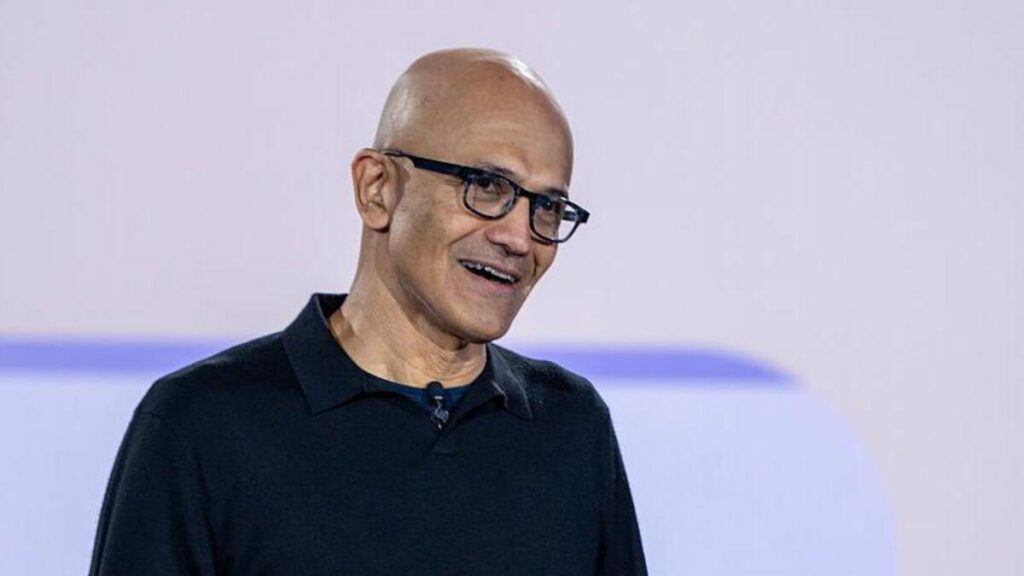
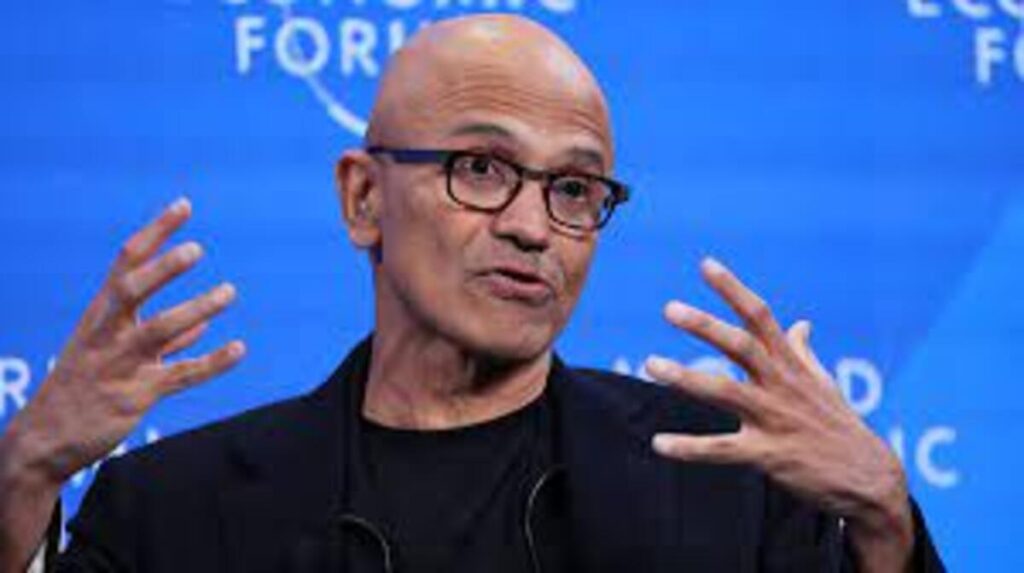
Speaking only to the BBC Microsoft CEO Satya Nadella told the BBC of the technology’s potential to drive economic growth.
“It may happen quicker, so our hope is not ten years but perhaps five”.
“Whenever someone gets passionate about AI, I want to see it ultimately in the economic growth and the GDP growth.”
Prime Minister Sir Keir Starmer called the US-UK agreement “a generational step change in our relationship with the US”.
He went on to say that the deal was “creating high-skilled jobs, putting extra cash in people’s pockets and ensuring this partnership works for every part of the United Kingdom”.
The UK economy has been stubbornly slow in recent months.
Nadella equated the economic advantages of the meteoric growth of AI to the effect of the personal computer when it became prevalent in the business environment, approximately a decade after it initially began to scale in the 1990s.
But there are increasingly vocal whispers too that AI is a highly profitable bubble that is set to burst. Nadella admitted that “all tech things are about booms and busts and bubbles” and cautioned that AI should not be over-hyped or under-hyped but also asserted the new-born tech would still usher in new products, new systems and new infrastructure.
AI could boost UK economy by 10% in five years Microsoft boss
He accepted that its power usage is still “very high” but contended that its potential value, particularly for healthcare, public services, and business efficiency, was an acceptable risk.
He further stated that the money put into data centres was “effectively” the same as money spent on upgrading the power grid but did not specify that cash would go directly to the UK’s power company, the National Grid.
The campaign group Foxglove has cautioned that the UK may find itself “paying for the huge sums of power the giants require”.
The supercomputer, which will be constructed in Loughton, Essex, was already plans announced last January by the government, but now Microsoft has joined the project.
Big tech comes to town
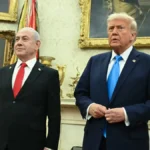
Mr Nadella, unveiled the investment as Donald Trump has landed in the UK on a three-day state visit.
The US and UK signed a “Tech Prosperity Deal” during the visit, which aims to deepen cooperation on AI, quantum computing and nuclear power.
Google has pledged £5bn on AI research and infrastructure over the next two years.
Nvidia also committed to building AI in the UK, which will drive innovation, economic growth and employment,
The firm indicated that with its partners it would spend as much as £11bn in the UK, in what it described as the largest AI infrastructure deployment in the history of the UK.
AI could boost UK economy by 10% in five years Microsoft boss
UK Chancellor Rachel Reeves also unveiled a £735m data centre as part of the investment on Tuesday in Hertfordshire.
There are some fears that taking so much money from US investors will see the UK too heavily dependent on foreign tech.
In July, Trump laid bare his intentions to see the US win the worldwide AI race.
One of the methods that it said it would do this was to “export American AI to allies and partners.”
The government has entered into several deals with US tech firms, including a deal to utilize OpenAI services in the public sector and a £400m agreement to utilize Google Cloud services within the Ministry of Defence.
Satya Nadella stated he believed the pact outlined “the next phase of globalisation” and contended that access to foreign technology services harnessed digital sovereignty instead of undermining it.
On the rising theme of AI replacing jobs, Nadella explained that Microsoft also had to “keep pace with the pace of technology change”, having this year fired thousands of employees despite record revenues and profits. He called it “the hard process of renewal”.
AI growth zone in north-east England
The government also stated that there was “potential for over 5,000 jobs and billions of private investment” in north-east England, which was identified as a new “AI growth zone”.
The government last year unveiled a £10bn investment in a data center to be constructed close to Blyth, Northumberland.
It has now revealed another data center project named Stargate UK by Open AI, chip manufacturer Nvidia, semiconductor firm Arm and scale.
That will be located at Cobalt Park in Northumberland.
But the UK model is a small part of the firm’s US Stargate initiative, which Open AI established in January with a pledge to spend $500 billion over four years constructing new AI infrastructure for itself.
Reaction so far to the deal has been widely welcoming, but it is obvious that there are numerous challenges in store for the UK if it is to realize its intended potential.
The Tony Blair Institute called the news a “breakthrough moment” but noted that Britain had a bit of work to do: “transforming planning regulations, speeding up delivery of clean energy projects, and constructing the digital infrastructure needed to power the country’s tech-enabled growth strategy,” said Dr Keegan McBride, the Tony Blair Institute for Global Change’s expert on emerging tech and geopolitics.
AI could boost UK economy by 10% in five years Microsoft boss
Matthew Sinclair, the UK director of the Computer & Communications Industry Association, welcomed the deal as “a powerful demonstration of the scale of the AI opportunity for the UK economy.”
However, the Conservative Party pointed out that other giant global firms like the drugs giant Merck have in recent times cancelled or put on hold their UK expansion plans.
Satya Nadella gave an interview to the BBC News between board meetings, just before boarding a flight to accompany Donald Trump as he touches down in the UK on a three-day state visit.
Nadella is among other tech bosses, such as OpenAI’s Sam Altman and Nvidia’s Jensen Huang, who will be joining the Royal state banquet on Wednesday.
He told him he would use Microsoft’s AI system Copilot to assist him with choosing what to wear.
“I was actually quite surprised there was a rather different dress code, which I’m not sure really that I am prepared for,” he said.